
Green County Marriage License
Green County marriage licensing is centered in Monroe, but the summary-level research for this county is thin enough that the best approach is to combine the clerk contact with Wisconsin's statewide rules. That is still enough to plan well if you know what matters first: who applies, where the ceremony will happen, how the waiting period affects the date, and where the record goes after the wedding. The county fee and waiver amounts are clear, and the wait is slightly longer than the strict statewide minimum, so couples should build a little extra time into the calendar and confirm the details with the clerk before they make the drive.
Green County Clerk Office
The Green County Clerk office is at 1016 16th Ave., Monroe, WI 53566, and the clerk phone number is (608) 328-9430. Monroe is the county seat and the practical starting point for the marriage license process, even when a couple plans to marry somewhere else in Wisconsin. Because the local research summary does not include a full office-hours schedule, the most useful first move is to call before you leave home. That keeps you from guessing about the best time to apply and lets you confirm that the office is ready for the paperwork you are bringing.
The county's local research points to two useful official reference pages: the Green County Law Library page at wilawlibrary.gov/topics/county.php?c=Green&a=a&l=l&f=f&r=r and the county clerk page. Those sources anchor the Monroe clerk office in a local record trail rather than leaving you with a vague statewide overview.
Green County also fits into Wisconsin's statewide marriage-license system. Under state guidance, you can apply for a license before the county clerk of any county in Wisconsin, and the license may be used and filed in any county in the state. That means Monroe is the point of entry for Green County applicants, but it is not the only place in Wisconsin where the license can travel after it is issued. The state framework is what makes the local office useful even if the wedding itself is planned elsewhere.
What To Bring For A Green County Marriage License
Because Green County's summary is compact, the safest way to build your checklist is to start with the standard Wisconsin marriage requirements and then confirm anything unusual directly with the clerk. State guidance says applicants generally apply together and in person, and they should know the ceremony date, ceremony location, officiant information, and both Social Security numbers before they arrive. State guidance also calls for photo identification, proof of current physical address, and certified birth certificates. If either applicant has been married before, prior-marriage documentation becomes important too, including proof that the previous marriage ended legally.
Use this practical checklist when you prepare for Monroe:
- Certified birth certificate
- Photo identification
- Proof of current address
- Social Security number
- Wedding date and location
- Officiant name, address, phone number, and email if available
- Divorce judgment or death certificate if a prior marriage ended
Those items come from the broader Wisconsin rule set rather than from a long county checklist, which is exactly why Monroe planning benefits from a little extra attention. Green County does not need to create a special local rulebook when the state already requires the core identity and ceremony details. The clerk needs enough information to issue a valid license, and the couple needs enough clarity to make sure the ceremony and the record path stay aligned. If anything on the state list is missing, the application can slow down immediately, so it pays to bring more than you think you might need.
Fees, Waivers, And Timing In Monroe
Green County's summary lists an $85 marriage license fee and a $25 waiver fee. The waiting period is summarized as 5 to 6 days, which is the key detail to watch when you build the wedding timeline. Because the county summary is a little broader than the statewide minimum, the most cautious way to plan is to treat the wait as roughly one week and then verify the exact release day with the clerk when you apply. That is especially important if family members are traveling or if the ceremony date is tied to a venue reservation.
Statewide guidance from Wisconsin Law Help explains that the usual application window is four to 63 days before the ceremony, the license is issued on the fourth day after application, and it is good for 60 days from issuance. Green County's 5 to 6 day summary fits comfortably within that framework, but the local timing still matters because it tells you how much room the Monroe office expects you to leave between application and ceremony. If you try to cut it too close, the waiting period becomes a scheduling problem rather than a paperwork detail.
That timing also explains why Monroe is the place to start, even when the couple plans to marry in a different county. The local clerk office is the gatekeeper for the license, while the state law governs the larger rules around issuance, use, and return. If you are comparing options, Green County is best viewed as a place where the paperwork begins and the ceremony timing gets locked in, not as a county with a separate system. The clerk fee, the waiver option, and the waiting period all work together to define the actual pace of the application.
How State Law Fits Green County
Wisconsin's marriage framework in Wis. Stat. ch. 765 gives Green County its legal background. The county clerk in Monroe issues the license, but the state law is what explains why the clerk needs both applicants, the ceremony date, the location, and the officiant information before the document is issued. Wisconsin Law Help also notes that the license can be used and filed in any county in the state, which is especially helpful for Green County couples who want a ceremony outside Monroe or even outside Green County entirely.
The state vital-records office at dhs.wisconsin.gov/vitalrecords is the next stop in the larger record chain. That office is responsible for filing, preserving, and issuing marriage record copies, while local registers of deeds handle county-level copies after the marriage is recorded. For Green County, that means the clerk office in Monroe begins the process, the officiant completes the ceremony and returns the signed license, and the records side of the county system takes over when you later need certified proof. The county summary does not add a local records office address, so it is best to keep the Monroe clerk as the application contact and the state vital-records system as the copy-and-record reference.
If you like historical context, the Wisconsin Historical Society explains that marriage records have long been maintained at the state level, especially for records before 1907. That background helps explain why the local marriage license process is so careful about signatures, dates, and later record return. Green County sits inside that larger record tradition. The clerk in Monroe is not just issuing a form. The office is starting a document trail that can later support certified copies and family history work, which is why even a summary-level county page deserves a careful read.
Green County Office Images
The Green County Law Library page at wilawlibrary.gov/topics/county.php?c=Green&a=a&l=l&f=f&r=r is one of the clearest local references for the Monroe marriage license process.
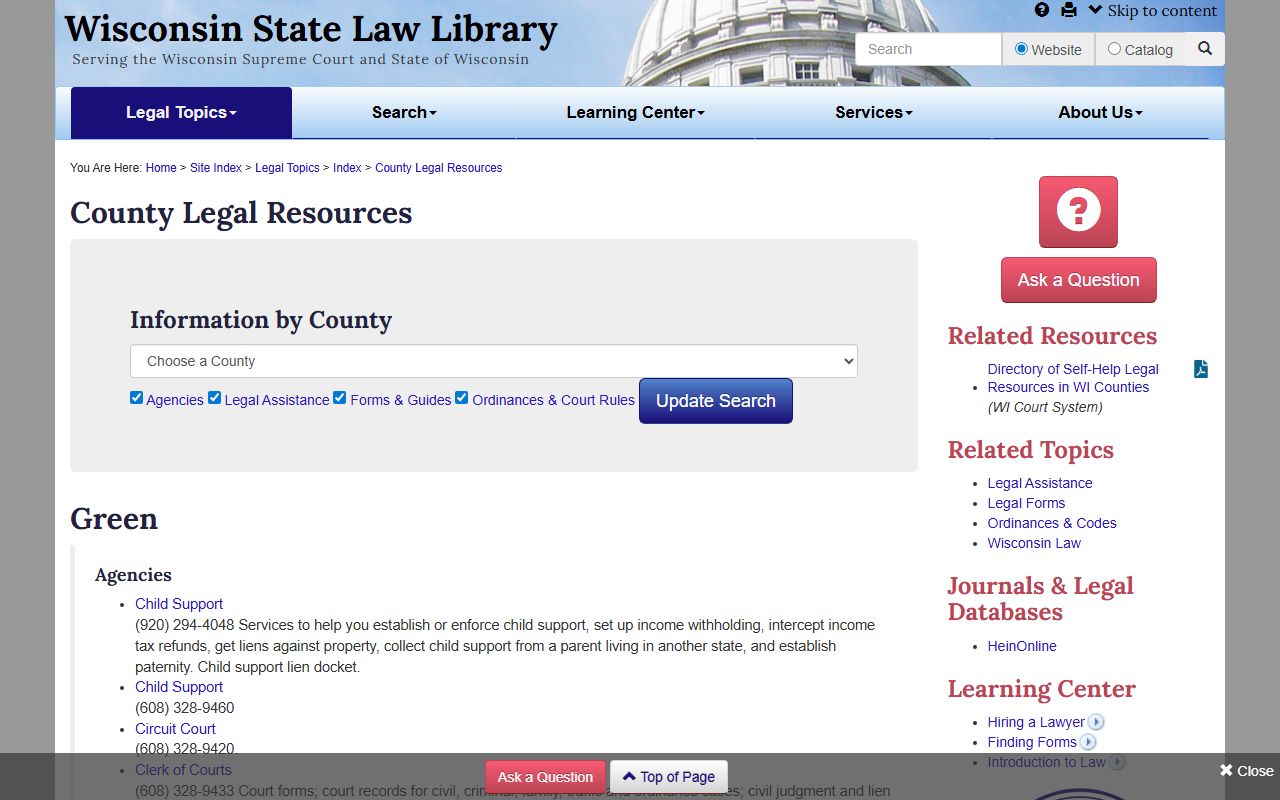
That reference is useful when you want a county-centered explanation alongside the state rules.
The Green County Law Library page and the county clerk page give a quick official planning view of the Monroe marriage license process.
Use it as a shortcut for orientation, then let the clerk and state rules decide the final details.
After The License Is Issued
Once Green County issues the license, the countdown to the ceremony becomes the next concern. The summary-level waiting period means you should not assume the license is immediately usable, and the statewide rules make clear that the officiant still has to sign and return the document after the wedding. If that return step is delayed, the marriage still happened, but the record trail becomes harder to follow. That is why Monroe should be treated as the start of the process, not the end of it. The application creates the record path, but the signed license is what completes it.
For couples who expect to need certified copies soon after the wedding, the broader Wisconsin record system is the place to think about next. The state vital-records office explains how marriage copies are issued, and the county register of deeds would be the local office that keeps the record moving after it is returned. Green County's research does not add a detailed local copy schedule, so the practical move is to keep your Monroe clerk contact handy and then follow the state record channels if you need extra copies. That is the safest way to avoid guessing about where the certificate goes after the ceremony.
Green County is a good example of how a short county summary can still support a solid plan. The fee is clear, the waiver is clear, and the 5 to 6 day waiting period gives you enough information to work backward from the wedding date. If you combine that with the statewide four-to-63-day guidance and the rule that the license can be used anywhere in Wisconsin, the process becomes manageable even without a long county instruction page. The key is to use Monroe as the application point, Wisconsin law as the timing framework, and the local record system as the follow-up path.