
Kenosha County Marriage License
Kenosha County's marriage license process is straightforward on paper, but the thin summary research means the safest plan is to anchor everything to the clerk office in Kenosha and then check the timing and payment details before you go. The county fee range is published, the waiting period is clear enough to plan around, and the clerk contact is easy to reach. Because the payment guidance varies slightly across source pages, this is a county where it pays to confirm payment method and office expectations directly rather than relying on one quick assumption. That is especially true if you are trying to fit the application into a tight wedding timeline.
Kenosha County Clerk Office
The County Clerk office is at 1010 56th St., Kenosha, WI 53140, and the phone number is (262) 653-2400. That office is the correct starting point for a Kenosha County marriage license, especially because the research summary does not include a more detailed office-hours schedule. The clerk office is the place to confirm whether the appointment timing, paperwork, and payment method all line up before you travel. In a county with mixed source notes on payment, a quick call can save a second trip.
The Kenosha County Law Library page at wilawlibrary.gov/topics/county.php?c=Kenosha&a=a&l=l&f=f&r=r and the county clerk page are the best supporting references in the research bundle. They show that the county seat office is the key local contact and help frame the process without overcommitting to details that vary by source. Because Kenosha is a larger county, those official references are especially helpful for keeping the local office, the record trail, and the timing notes in one place.
Statewide marriage law still matters here. Wisconsin allows applicants to apply with any county clerk in the state, and the issued license can be used and filed anywhere in Wisconsin. That means the Kenosha office is not the only place the license can matter, but it is the local point where the process begins. If the ceremony will happen in another county, the statewide rule keeps the license useful across county lines while still requiring the Kenosha clerk to start the file correctly.
What To Bring To The Kenosha Appointment
The summary research for Kenosha does not publish a full county checklist, so the best way to prepare is to rely on the Wisconsin marriage requirements and then confirm any local differences with the clerk. Applicants should plan to apply together and in person, know the ceremony date and location, and bring the standard documents counties commonly ask for. That usually means a certified birth certificate, photo identification, proof of current address, and Social Security numbers. If either applicant has been married before, divorce or death records should be ready too, because prior marital status affects whether the clerk can issue the license right away.
Use this practical checklist as your starting point:
- Certified birth certificate
- Photo identification
- Proof of current address
- Social Security number
- Wedding date and location
- Officiant name and contact information if available
- Divorce judgment or death certificate if a prior marriage ended
That checklist is driven by Wisconsin law and then localized to Kenosha because the county summary is thin on its own. The clerk office in Kenosha is not trying to build a special process around unusual paperwork. It is simply applying the same legal standards that other Wisconsin county clerks use. If your documents are in order, the appointment should be mostly a question of confirming the details and moving the record into the county system. If anything is missing, the clerk is likely to pause the file until it is corrected.
Fees, Payment Notes, And Waiting Period
Kenosha County's summary lists a marriage license fee in the range of $80 to $110, and the waiting period is summarized as 5 to 6 days. That gives couples enough information to work backward from a wedding date, but it also means the office should be called directly if you need the exact current fee for your situation. Because the research notes vary a little on payment rules, the best assumption is not to assume one payment method and hope. Instead, confirm what the office will accept before you show up.
Research notes mention cash or credit with variation by location, which is why caution is better than certainty here. A Kenosha County couple should plan for the possibility that payment expectations differ by office workflow or by the exact clerk location used for the marriage license. That does not make the process complicated, but it does make advance confirmation worthwhile. If you are counting on a card, ask whether a convenience fee or a different payment rule applies before you make the trip. If you are counting on cash, make sure the office accepts it as expected and that you know the amount to bring.
The waiting-period summary gives you the other half of the timing picture. A 5 to 6 day wait is close enough to the state framework to be familiar, but it still matters when a venue date is fixed or family is traveling. The safest Kenosha plan is to apply well before the ceremony and then leave room for the license to become usable. That keeps the calendar from becoming a problem later and makes it easier for the clerk to process the file without any rush.
How State Law Fits Kenosha County
Wisconsin's marriage law chapter at Wis. Stat. ch. 765 gives Kenosha County its legal structure, while Wisconsin DHS vital records explains the record system that follows the ceremony. The county clerk in Kenosha issues the license, but the state law is what gives the license its force and ensures it can be filed and later copied in Wisconsin's official record system. For couples who are comparing counties or planning a ceremony outside Kenosha, that statewide framework is the part that matters most after the local application is complete.
Wisconsin Law Help at wislawhelp.org/page/517/requirements-valid-marriage is also useful because it gives a general explanation of how a valid marriage works in Wisconsin. That context is especially helpful in a county like Kenosha, where the local source notes are thinner and payment guidance varies. The state explanation keeps the basics clear: the license is a legal prerequisite, the ceremony has to happen inside the valid window, and the signed license must eventually be returned so the marriage can be recorded.
The Wisconsin Historical Society's pre-1907 records article at wisconsinhistory.org adds the historical record context. Kenosha County couples may not need that background for the wedding itself, but it is useful if you are thinking ahead to certified copies or family history research. The modern clerk office begins the process, and the larger Wisconsin record system keeps the marriage available later. That is why even a thin county summary still fits into a larger and well-defined state record structure.
Kenosha County Office Images
The Kenosha County Law Library page at wilawlibrary.gov/topics/county.php?c=Kenosha&a=a&l=l&f=f&r=r is a helpful government reference for the marriage license process in Kenosha.
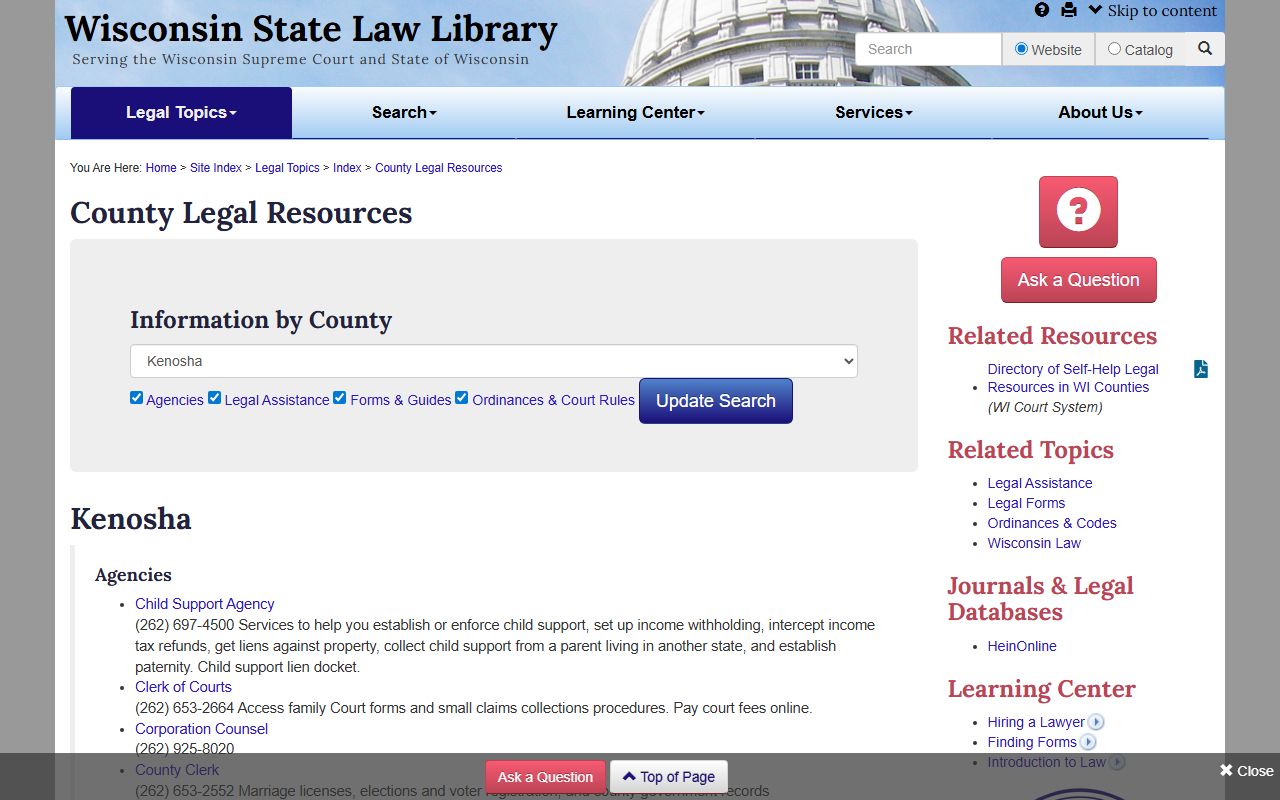
That source is useful when you want a county law-library reference alongside the clerk office contact.
The Kenosha County Law Library page and the clerk office page give a compact planning view of the county process.
Use them as quick orientation sources, then let the clerk office confirm the current payment and timing details.
After The License Is Issued
After the Kenosha County license is issued, the next job is to keep the ceremony and the return filing inside the valid window. That matters because the license is the legal document that has to be signed and sent back before the marriage is fully recorded. If the officiant or the couple misses that step, the marriage can still have taken place, but the paper trail becomes harder to follow when later certified proof is needed. Kenosha County does not add a special wrinkle here, so the standard Wisconsin filing path is the one to keep in mind.
Certified copies later come from the Wisconsin record system and the local records office. The county summary does not provide a separate Kenosha register office address or copy fee, so the best move is to keep the clerk phone number handy and then use the broader state and county records channels if copies are needed after the wedding. That is especially helpful if you are making a name change or updating accounts right away.
Kenosha County's process is not difficult once the timing and payment question are settled. The county office in Kenosha handles the front end, Wisconsin law determines the validity and use of the license, and the later records structure handles the proof of marriage. If you line those pieces up before the appointment, the county is straightforward to work with even if the source notes are a little inconsistent on payment.