
Lafayette County Marriage License
Lafayette County keeps the marriage license process anchored in the county clerk office in Darlington, but the summary research shows why planning still matters. The county lists an appointment requirement, a $75 fee, a $25 waiver fee, and a waiting period of 3 to 5 days. That combination means the main task is not finding a complicated form, but matching the clerk appointment to the wedding calendar. If your ceremony is close, treat the office as the first stop and confirm the timing before you set the date in stone.
Lafayette County Clerk Office
The County Clerk is at 615 Main St., Darlington, WI 53530, and the phone number is (608) 776-4850. Because the county summary says an appointment is required, the most practical approach is to call before you travel and ask how the office wants the application scheduled. In a county like Lafayette, where the office is tied to the county seat and not a remote annex, the clerk appointment is the place where the local process starts to become real. The office is not just a mailing address. It is the point where your wedding date, the waiting period, and the fee all have to line up.
The local facts you supplied are short, which is actually useful because it keeps the page focused on what matters most. You know the office, the phone number, the fee, and the appointment requirement. That is enough to make a strong plan without inventing extra details. If you are applying from inside Lafayette County, the Darlington office is the one to treat as primary. If you are applying from outside the county, Wisconsin law still lets you use a county clerk office in the state, but the local appointment and waiting-period rules still need to be followed once Lafayette is the office handling your license.
For couples who want a clean checklist before they leave home, the safest mindset is to assume the clerk will want the basics of identity and ceremony planning, then ask what else the office expects for your specific situation. Wisconsin marriage law is statewide, but the local office controls the appointment flow and the issuance timing. That means the real question is not whether you can legally marry in Wisconsin. It is whether Lafayette County can issue the license on the day you need it and with enough time left for the waiting period to run.
Fees, Waiting Period, And Scheduling
Lafayette County lists a $75 marriage license fee and a $25 waiver fee. The summary also gives a waiting period of 3 to 5 days, which is a good reminder to build in a cushion rather than assume the minimum timing is enough. When a county summary uses a range instead of a single number, that is often a sign that the safest plan is to call the clerk and ask how the office measures the wait in practice. Does the clock start when the application is accepted, when the fee is paid, or when the office completes the file? Those details matter if your ceremony is near a weekend or holiday.
The practical lesson is simple. Do not treat the marriage license as a same-day task unless the clerk tells you otherwise. Even with the waiver fee noted in the summary, the county still gives you a waiting-period signal that should guide the schedule. A wedding date should be set after the office timing is understood, not before. That is especially important if guests are traveling or if the ceremony is already tied to a venue, officiant, or reception contract. A short administrative wait can create a bigger problem if everything else is locked in too early.
Wisconsin's statewide rule set helps explain why the county's timing matters. The state marriage law chapter, Wisconsin Statutes Chapter 765, is what gives county clerks the authority to issue marriage licenses and record marriages. Wisconsin Law Help is also useful because it explains the general requirements in plain language and reminds couples that the license process is part of the legal ceremony trail. Lafayette County is applying that state framework through the local clerk office in Darlington, so the county fee and waiting period are not separate from Wisconsin law. They are the local expression of it.
If you need a copy of the marriage record later, the timing question does not stop with the ceremony. The license is what starts the legal process, but the signed record is what moves into the state vital-records system after the wedding. That is why the county clerk appointment and the later record request belong in the same mental timeline. The first step is making sure the license can be issued in time. The second step is making sure the completed record can be found again when you need a certified copy.
How Wisconsin Rules Fit Lafayette County
Wisconsin's marriage rules are statewide, even when the license is issued by a county clerk. That means Lafayette County is not creating its own marriage law. It is operating inside the state's requirements for identity, eligibility, and return filing. The county summary gives you the local office details, while the state sources explain the legal structure behind them. If you want the broadest official context, the Wisconsin Department of Health Services page at Wisconsin DHS Vital Records is a good place to start because it explains how marriage records move through the state system after the ceremony.
The state guidance is also useful when a couple's situation is not straightforward. Previous marriages, name changes, and document questions are all easier to resolve when you remember that the clerk is working from a statewide statute rather than making one-off county rules. If either applicant has been married before, ask the office what proof it wants before the appointment. If the ceremony date is already chosen, ask the clerk to confirm how the 3 to 5 day timing affects the earliest possible issuance date. If the waiver fee applies to your situation, ask exactly what it changes and what it does not change.
That is where the legal and practical parts overlap. The law says a license is required, the county says an appointment is required, and the couple says the wedding date is already on the calendar. The best way to keep those three things aligned is to make the clerk conversation happen early enough that no one has to guess. Lafayette County does not need a complicated explanation beyond that. The office details are clear, the fee is listed, and the waiting period tells you to plan ahead instead of improvising at the last minute.
For people who want to understand how the local license fits into a broader records trail, the Wisconsin Historical Society article at Wisconsin Historical Society records information is a useful companion source. It helps explain why county records matter for both current proof of marriage and later historical research. The marriage license is the present-day document, but the record becomes part of a long-running Wisconsin archive. Lafayette County is one stop in that system, not the whole system itself.
After The Ceremony And Record Copies
Once the ceremony is complete, the important question becomes how the signed paperwork is returned and where the certified copy can later be requested. The county summary you provided does not list a separate records office address for Lafayette County, so the safest approach is to use the county clerk phone number if you need to ask about post-ceremony filing, then rely on the state records framework for certified copies. The general Wisconsin system is not hard to understand, but it does reward people who think ahead. The marriage license is only the first half of the story. The returned and recorded document is what makes later proof possible.
For that reason, Wisconsin DHS Vital Records is the right statewide reference when you are ready to ask about copies or replacement documents. The DHS page explains the official marriage record structure, while the county clerk handles the issuance side in Darlington. If you are changing a surname, updating insurance, or preparing financial paperwork after the wedding, the certified copy is the document you will likely need first. Keeping that in mind before the ceremony helps you avoid a scramble afterward.
The county does not need to publish a long guide for this to be useful. The important facts are already enough. You know where the office is, you know the phone number, and you know the timing constraints. If the license is issued on schedule, the rest of the record process becomes a routine Wisconsin vital-records matter. If the timing is tight, call before the appointment and make sure the clerk's calendar still works with your ceremony date. That is the simplest way to keep the marriage license from becoming the part of the wedding plan that causes preventable stress.
Lafayette County Marriage License Images
The Wisconsin State Law Library lists Lafayette County at the Lafayette County law library page, which is a useful official cross-check for the clerk office and the county's marriage license topic.
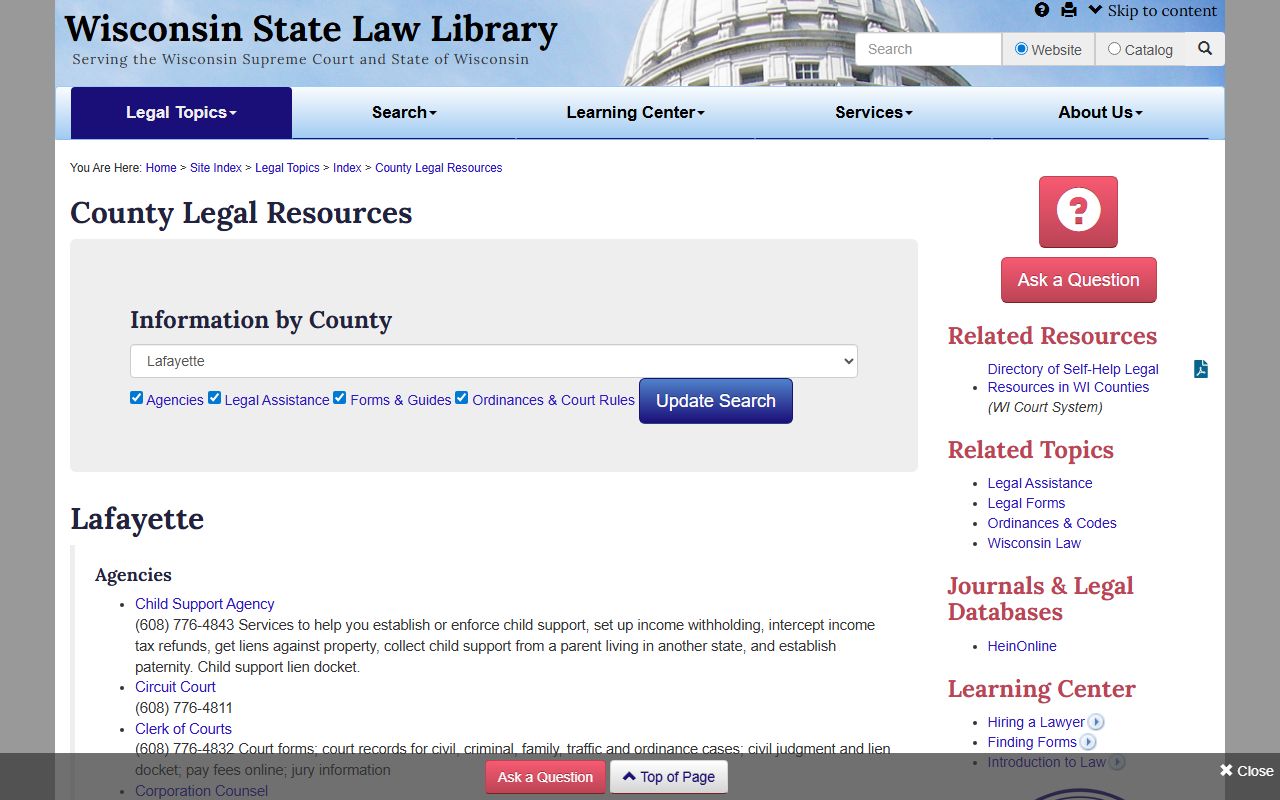
That image helps tie the page to a state law library source rather than a casual directory listing.
The county law library page is helpful for comparing the county summary with an official reference.
Use it as a comparison source, but keep the clerk office and the county summary in control of the appointment and fee details.
Lafayette County is straightforward once the appointment and timing are understood. The office is in Darlington, the fee is listed, the waiver fee is available, and the waiting period gives you a real scheduling window. If you plan around those facts instead of assuming a same-day license, the process stays predictable.