
Manitowoc County Marriage License
Manitowoc County keeps the marriage license process centered on the county clerk office in Manitowoc, and the summary research makes the key pieces easy to see even though it stays fairly brief. The county requires an appointment, so the first step is to plan the visit rather than assume a walk-in will work. The fee is clear, the waiting period is short, and the county seat office is easy to find, which makes the process fairly straightforward once you have the documents in hand. If you are trying to fit the application into a tight wedding schedule, the county's appointment rule is the detail that deserves the most attention.
Manitowoc County Clerk Office
The County Clerk is Jessica Backus, and the office is at 1010 S. 8th St., Room 115, Manitowoc, WI 54220. The phone number is (920) 683-4003. Manitowoc County says an appointment is required, so the clerk office should be treated as a scheduled visit rather than a same-day errand. The official county site at manitowoccountywi.gov is the best place to start when you want to confirm the current clerk contact and the local office setup before you drive in.
The county research also points to the Manitowoc County Law Library page at wilawlibrary.gov/topics/county.php?c=Manitowoc&a=a&l=l&f=f&r=r. That page ties the Manitowoc office to a broader Wisconsin record trail without overcomplicating a county process that is mostly about making an appointment and arriving with the correct paperwork. When the local research is short, that official page gives you enough structure to plan without guessing.
Wisconsin law still governs the larger marriage-license framework. That means Manitowoc County is the place where the application starts, but the license itself fits into a statewide system that allows it to be used and filed in any county in Wisconsin. For a couple marrying in another county or at a venue away from the city of Manitowoc, that statewide rule is what keeps the local clerk appointment relevant even if the ceremony happens elsewhere.
What To Bring To The Appointment
The summary research for Manitowoc does not publish a long county-specific checklist, so the safest approach is to use the Wisconsin marriage rules and then confirm any local differences with the clerk office. Applicants should plan to appear together and in person, know the ceremony date and location, and bring the identification and record documents that Wisconsin counties commonly require. That usually means a certified birth certificate, photo identification, proof of current address, and both Social Security numbers. If either applicant has been previously married, the documentation ending that marriage should also be ready.
Use this practical checklist when you prepare for the Manitowoc appointment:
- Certified birth certificate
- Photo identification
- Proof of current address
- Social Security number
- Wedding date and location
- Officiant name and contact information if available
- Divorce judgment or death certificate if a prior marriage ended
The county summary does not spell out every document line by line, but the statewide guidance does. Wisconsin Law Help explains that couples generally apply together and in person, that they need the ceremony date, location, officiant information, and both Social Security numbers, and that photo ID, current address, and certified birth certificates are part of the application. That is why the Manitowoc office is best understood as the place where Wisconsin's standard marriage requirements are applied locally rather than as a county with a special separate process.
Fees, Waivers, And The Three-Day Wait
Manitowoc County lists a marriage license fee of $80 and a $25 waiver fee. The waiting period is summarized as 3 days, which lines up well with the statewide Wisconsin timing framework. That three-day wait is short enough to be manageable for most couples, but it still matters if the ceremony date is fixed, if family members are traveling, or if the wedding is being timed around a venue reservation. The safest planning move is to apply well before the ceremony and not leave the clerk appointment until the last minute.
Payment notes in the research are a little less specific than the fee amount. The summary says payment may be by cash or credit depending on location, so Manitowoc couples should confirm the exact accepted payment method when they schedule the appointment. That is not a major obstacle, but it is the sort of detail that can turn into a second trip if you assume the wrong thing. Since the county requires an appointment anyway, it makes sense to settle payment expectations at the same time you confirm the visit.
The broader Wisconsin timing framework still applies. State guidance says couples generally apply four to 63 days before the ceremony, the license is issued on the fourth day after application, and it is valid for 60 days from issuance. Manitowoc's three-day summary fits within that pattern, which means the county process is not unusual. It simply requires that you leave enough room for the license to become active before the wedding day and enough room afterward for the signed document to be returned and recorded correctly.
How State Law Fits Manitowoc County
Wisconsin's marriage law chapter at Wis. Stat. ch. 765 gives Manitowoc County its legal framework. The county clerk office in Manitowoc issues the license, but the state law is what explains why the clerk needs both applicants, the ceremony date, the location, and the officiant details before the document can be issued. That state framework also makes it clear that the license can be used and filed anywhere in Wisconsin, which is helpful if the ceremony is planned in a different county from the application.
Wisconsin DHS vital records is the next important reference because it explains how marriage records are handled after the ceremony. The county clerk starts the process, the officiant completes the ceremony and signs the license, and the record then enters the larger Wisconsin vital-records system. If you later need certified copies, the state office and the county records system are the places to think about, not just the clerk counter where the license was first issued. That distinction matters because the marriage license is the beginning of the record path, not the end of it.
Historical context from the Wisconsin Historical Society at wisconsinhistory.org is also helpful. Wisconsin has a deep marriage-record history, and that is part of why the county clerk process is so careful about signatures and timing. Manitowoc County is simply one local point in that larger state record structure. The local appointment gets the license moving, but the state rules are what keep the marriage legally valid and the record usable later on.
Manitowoc County Office Images
The Manitowoc County Law Library page at wilawlibrary.gov/topics/county.php?c=Manitowoc&a=a&l=l&f=f&r=r gives a county-level reference point for the marriage license process in Manitowoc.
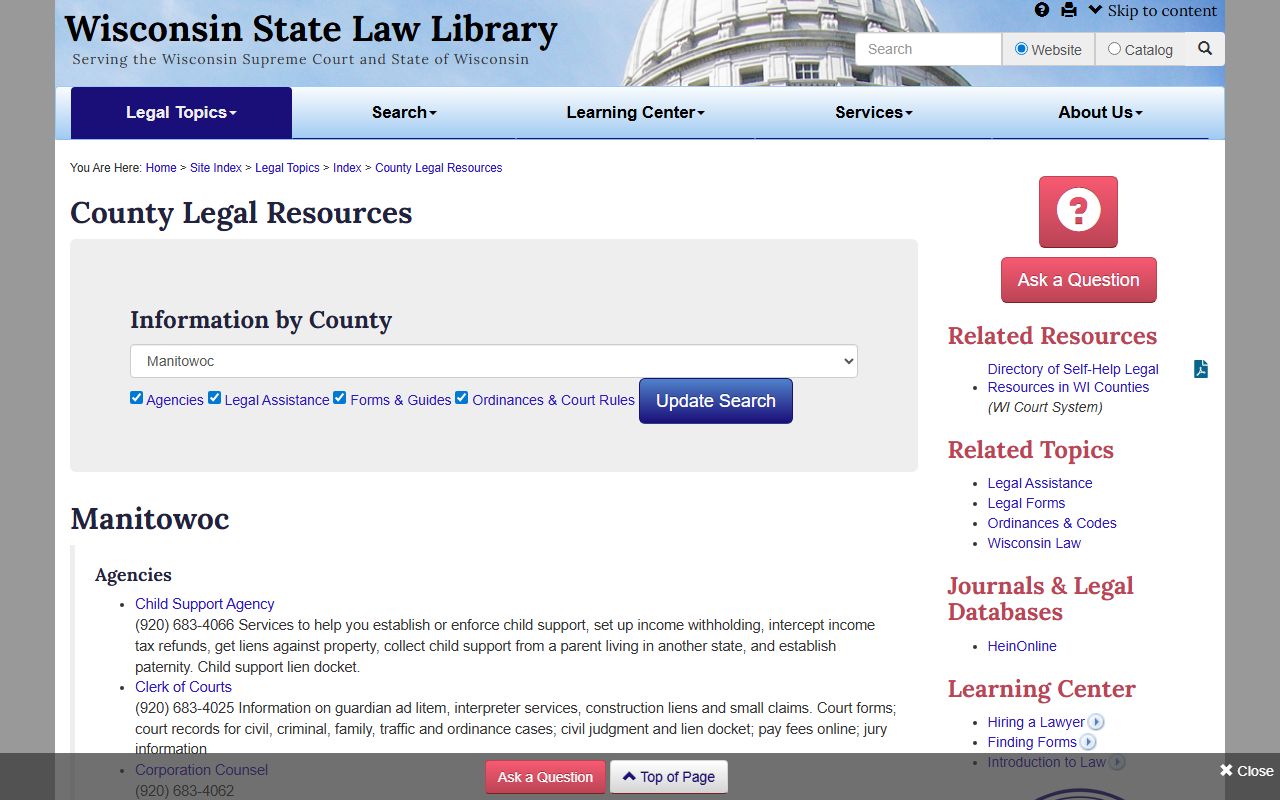
Use that source when you want a government-backed county reference to compare with the clerk office details.
The official Manitowoc County site at manitowoccountywi.gov is the county's main web presence for clerk information and local government contact.

That page is helpful if you want to verify the county office setup directly with the county itself.
The Manitowoc County law library page gives a compact planning view of the Manitowoc marriage license process.
Use it as a quick orientation source, then let the clerk office confirm the current appointment and payment details.
After The License Is Issued
Once Manitowoc County issues the license, the next important step is making sure the ceremony occurs within the valid window and that the signed license is returned afterward. That return step is easy to forget when the wedding itself is the focus, but it is the part that completes the record trail. If the officiant or the couple misses the return filing, the marriage may still be valid, but the paperwork trail becomes harder to follow when you later need certified proof. Manitowoc County does not add a special wrinkle here, so the usual Wisconsin filing path is the one to keep in mind.
If you know you will need certified copies after the wedding, the state vital-records system and the county records office are the places to think about next. The summary research does not identify a separate Manitowoc copy fee or register office address, so the practical move is to keep the clerk phone number close by and then follow the Wisconsin record channels if you need official copies later. That is especially helpful if you are changing names or handling financial paperwork soon after the ceremony.
Manitowoc County is a good example of a county where the main challenges are not complexity but timing and confirmation. The appointment requirement means you should not rely on a walk-in visit, the fee is modest enough to plan for, and the three-day wait leaves enough room for most common ceremony schedules. Once you align the appointment, the waiting period, and the later filing step, the county is straightforward to work with. The key is to treat the clerk office as the starting point and the state record system as the follow-up path.