
Marathon County Marriage License
Marathon County marriage license planning starts with the clerk office in Wausau, where the fee, the waiting period, and the basic filing details should be confirmed before the ceremony is locked in. The county summary is short, so the safest approach is to combine the local facts with Wisconsin's statewide marriage rules and keep the schedule realistic. If you are planning on a short timeline, the clerk office address and phone number matter just as much as the legal rules, because the license has to be issued correctly and then used inside the county's waiting window. A little preparation now prevents a second trip later.
Marathon County Clerk Office
The Marathon County Clerk office is at 500 Forest St., Wausau, WI 54403, and the phone number in the county summary is 715-847-5500. That is the place to call when you need to confirm the current office setup, ask whether both applicants should appear together, and verify whether anything about the application has changed since the summary was published. For a Marathon County marriage license, the office visit is the key step because the clerk is the point of contact that turns the statewide rules into a usable local document.
The research lists the fee as $100, which is important because it gives you a realistic budget before you go to Wausau. Even when the fee is fixed in a summary, it is still worth confirming it directly with the clerk. Counties can update posted fees, and a small difference can become a delay if you are counting on a particular payment method or only carrying the exact amount. The county clerk is the best source for whether the office wants cash, card, or another form of payment at the counter.
Marathon County does not need a complicated approach. The practical plan is to call first, confirm the office location, confirm the fee, and then make sure both applicants understand what information the clerk wants on the day of application. Wisconsin marriage licenses are part of a statewide process, but each county office still controls the front-end details. That means the County Clerk is the local gatekeeper for the timing question, the identity question, and the issue date that determines when the marriage can happen.
For people who are traveling from elsewhere in the county, the Wausau office is also the easiest point to anchor the rest of the wedding schedule. Once the license is ready, the ceremony date can be built around the waiting period instead of guessed at from memory. That is the cleaner way to handle a county process that is otherwise straightforward but still time-sensitive.
Timing And Wisconsin Rules
The Marathon County summary lists a 3 day waiting period, so the ceremony date should be planned with that delay in mind. The safest reading is simple: do not expect same-day use, and do not schedule the wedding so tightly that you cannot absorb a short delay. Wisconsin's marriage-license rules are statewide, but the county timing is what determines the actual issue date in Wausau. If the wedding is already tied to travel or a venue reservation, the waiting period should be treated as part of the planning, not as an afterthought.
Wisconsin law chapter 765 provides the legal framework for the license, and the state guidance at Wisconsin DHS vital records explains how the record fits into the larger state system after the ceremony. For applicants who want a plain-language summary of the basic requirements, Wisconsin Law Help is a useful state-level reference. Those sources matter because county pages can be brief while the legal requirements remain the same across Wisconsin.
The state rules are especially useful if either applicant has a situation that commonly creates confusion. Recent divorce, age questions, or missing ceremony information can all slow down the county office if you show up without the right context. That is why it helps to have the wedding date, the intended location, and the officiant information ready before you walk in. Marathon County is not described as having a special separate process, so the county office should be treated as the local application point for a standard Wisconsin marriage license.
State guidance also helps with the post-ceremony step, which people sometimes forget because the wedding day itself feels like the finish line. The signed license has to be returned for recording after the ceremony, and the county and state record systems are what make later certified copies possible. If you want the license to lead cleanly into a marriage record, keep the issue date, the ceremony date, and the return filing step in the same mental checklist.
That sequence is the reason the three-day period matters so much. The county office is not just handing out paper. It is setting the start of the legal timeline, and the rest of the marriage record depends on that timeline staying intact from application through filing.
Marathon County Office Images
The Marathon County Law Library page at wilawlibrary.gov/topics/county.php?c=Marathon&a=a&l=l&f=f&r=r is the most direct government-backed local reference for the county's marriage license process.
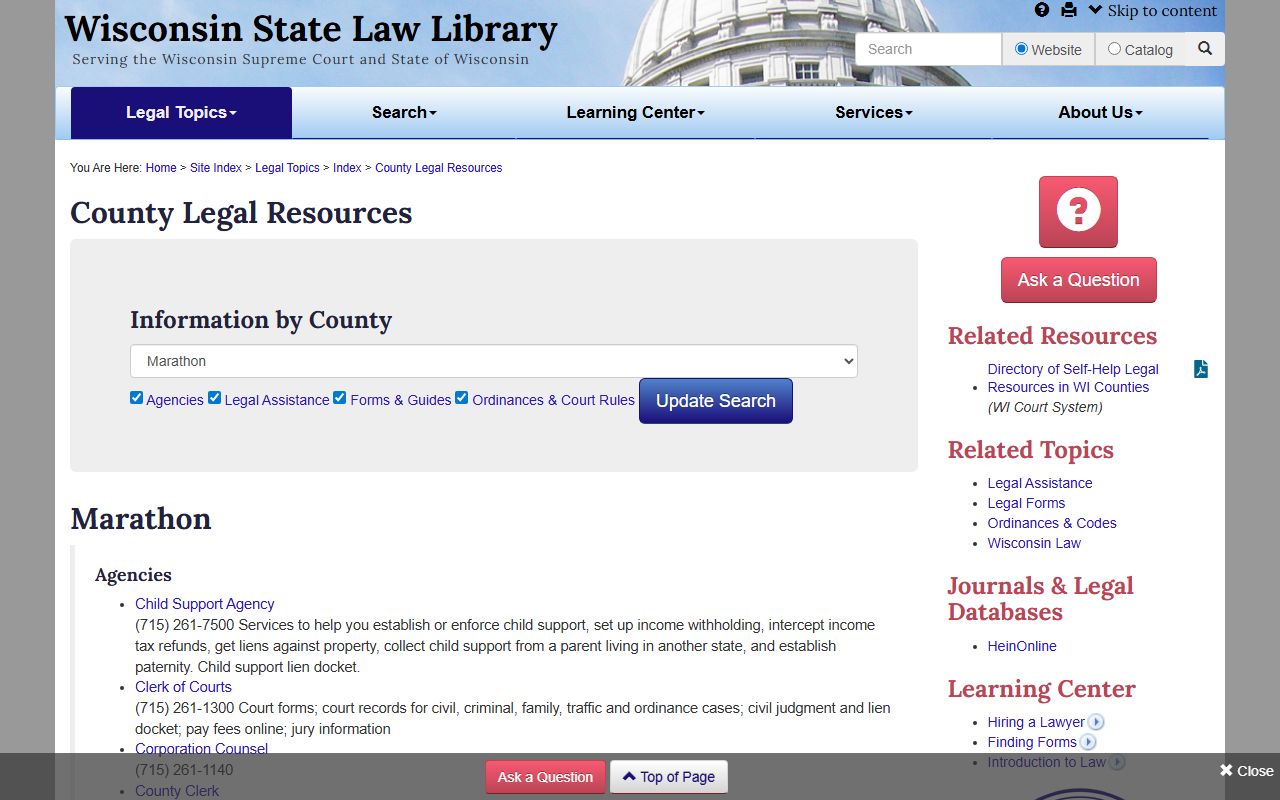
That source is useful when you want to compare a county-level legal reference with the clerk office details before making the trip to Wausau.
The Marathon County law library page gives a compact planning view of the local marriage license process.
Use it as a quick orientation source, then let the clerk office confirm the current fee and timing before you rely on the details.
Marriage Records After The Ceremony
Once the wedding is complete, the license turns into a record trail that can matter later for name changes, insurance, benefits, or family history. The clearest statewide starting point for a certified marriage certificate is Wisconsin DHS vital records. That page explains the state-level record system and helps you understand where a copy request belongs after the county has done its part. For a Marathon County couple, that distinction matters because the clerk issues the license, but the marriage record continues into the broader Wisconsin vital-records system after the ceremony.
If you are thinking about older family history, the Wisconsin Historical Society guide at wisconsinhistory.org/Records/Article/CS88 is the better long-term reference. It is especially useful when you are looking for a marriage that happened long before modern digital records. A county marriage license page can tell you how to start today, but the historical guide is what helps with deeper research when a family line stretches back across several generations.
The state statute page at docs.legis.wisconsin.gov/statutes/statutes/765 is also worth keeping open if you want the legal framework behind the clerk's local process. Marathon County follows that statewide structure, so the county office, the officiant, and the record system all fit into one legal chain. That is why the clerk phone number is still useful even after the license is issued. If you later need to ask where a copy request belongs, the office can point you toward the right channel.
For practical planning, the rule is simple. Use the county office to get the license, use the state guidance to understand the marriage record, and keep the return filing step in mind so the marriage ends up recorded correctly. That is usually enough to avoid confusion and to keep the paperwork from becoming harder than the wedding itself.