
Marinette County Marriage License
Marinette County marriage license planning starts with the clerk office in the county seat, where the fee, waiting period, and filing questions should be settled before the ceremony date gets too close. The local summary is thinner than some counties, so the cleanest approach is to use the county facts together with Wisconsin's statewide marriage rules and confirm anything time-sensitive directly with the office. That matters most when the wedding is already tied to travel or a venue reservation. If you can line up the clerk visit early, the rest of the process is usually easier to manage and less likely to turn into a last-minute problem.
Marinette County Clerk Office
The Marinette County Clerk office is at 1926 Hall Ave., Marinette, WI 54143, and the phone number in the summary research is 715-732-7406. That is the office to call if you need to verify the current application routine, ask whether both applicants must appear together, or confirm whether anything has changed since the county summary was assembled. For a Marinette County marriage license, the clerk is the local point where the statewide marriage rules become a usable county document.
The research says the fee varies, which is the kind of detail that makes a direct office call worthwhile. County marriage-license fees can change, so the safest move is to confirm the current amount before you budget the trip. The office can also tell you how payment is handled so you do not arrive with the wrong form of payment.
Marinette County is not presented as a special-case office with a separate legal process. That means the practical plan is to use the clerk office for the local details and the state guidance for the legal framework. If you are coming from elsewhere in the county, the office in Marinette should be treated as the first stop in the marriage timeline, not as an optional errand that can be delayed until the ceremony week.
The simplest way to manage a variable fee is to confirm it while you are confirming the rest of the application basics. That keeps the trip organized and avoids the common problem of showing up with a fee expectation from a summary page that no longer reflects the office's current practice.
Timing And Waiting Period
The summary research for Marinette County gives a 3 to 6 day waiting period, which is a broader range than the standard statewide baseline. Wisconsin law chapter 765 sets the legal framework, and the state guidance at Wisconsin DHS vital records explains how marriage records move through the system after the ceremony. Because the local summary is broader than a single number, the safest reading is that you should confirm the current issuance window with the clerk before you finalize a ceremony date. The extra time cushion matters if your wedding is already tied to travel, lodging, or venue deposits.
That 3 to 6 day range should not be treated as a casual estimate. In practice, it means Marinette couples should leave more room than they think they need and then confirm whether the office is counting the application day, the usual waiting period, or any local waiver option that changes the timeline. The state-level source Wisconsin Law Help is useful here because it breaks down the basic marriage requirements in plain language while still reminding you that the clerk office controls the local filing step.
When the ceremony date is fixed, the waiting period becomes a planning tool rather than a technicality. If you apply too late, the office may be working within the right legal framework but still miss your wedding date. If you apply early enough, the clerk's office can process the license without putting pressure on the rest of the schedule. Marinette County does not appear to use a separate local system outside Wisconsin law, so the county timeline should be understood as the county version of a statewide rule.
The practical takeaway is simple. Confirm the fee, confirm the exact issuance timing, and build a little extra room into the wedding calendar. That is the easiest way to keep a Marinette County marriage license from turning into a date change you did not want.
How Wisconsin Law Fits Marinette County
Wisconsin's marriage law chapter at Wis. Stat. ch. 765 governs the basics for Marinette County, just as it does everywhere else in the state. The county clerk is the local office that applies those rules, which means the county page should be read as the place where a statewide process starts rather than as a stand-alone county exception. That distinction matters when you are trying to figure out what needs to be brought to the office and what can be left for later.
The Wisconsin Law Help page at wislawhelp.org/page/517/requirements-valid-marriage is a helpful plain-language source for the core requirements. It is a good place to review the marriage basics if you need a reminder about age questions, who can marry, and what kind of information the clerk typically needs before issuing a license. Marinette County applicants can use that statewide guidance to narrow down the conversation with the clerk so the office visit stays focused.
It also helps to remember that the license is only the first part of the record trail. The application and waiting period lead to the ceremony, and the signed license then moves into the record system after the marriage takes place. That is why the clerk office, the officiant, and the later record request all belong to the same process even though they happen at different times. If you are organizing a wedding that crosses county lines, the statewide law is the reason the Marinette office still matters even when the ceremony itself will happen somewhere else in Wisconsin.
The county research does not point to a special appointment-only system or a separate local exception, so the most careful approach is to treat Marinette as a normal Wisconsin county with a slightly wider timing summary and a fee that needs confirmation by phone. That keeps the process grounded in the current research instead of assumptions.
Marinette County Office Images
The Marinette County Law Library page at wilawlibrary.gov/topics/county.php?c=Marinette&a=a&l=l&f=f&r=r is the clearest government-backed local reference for the county marriage license process.
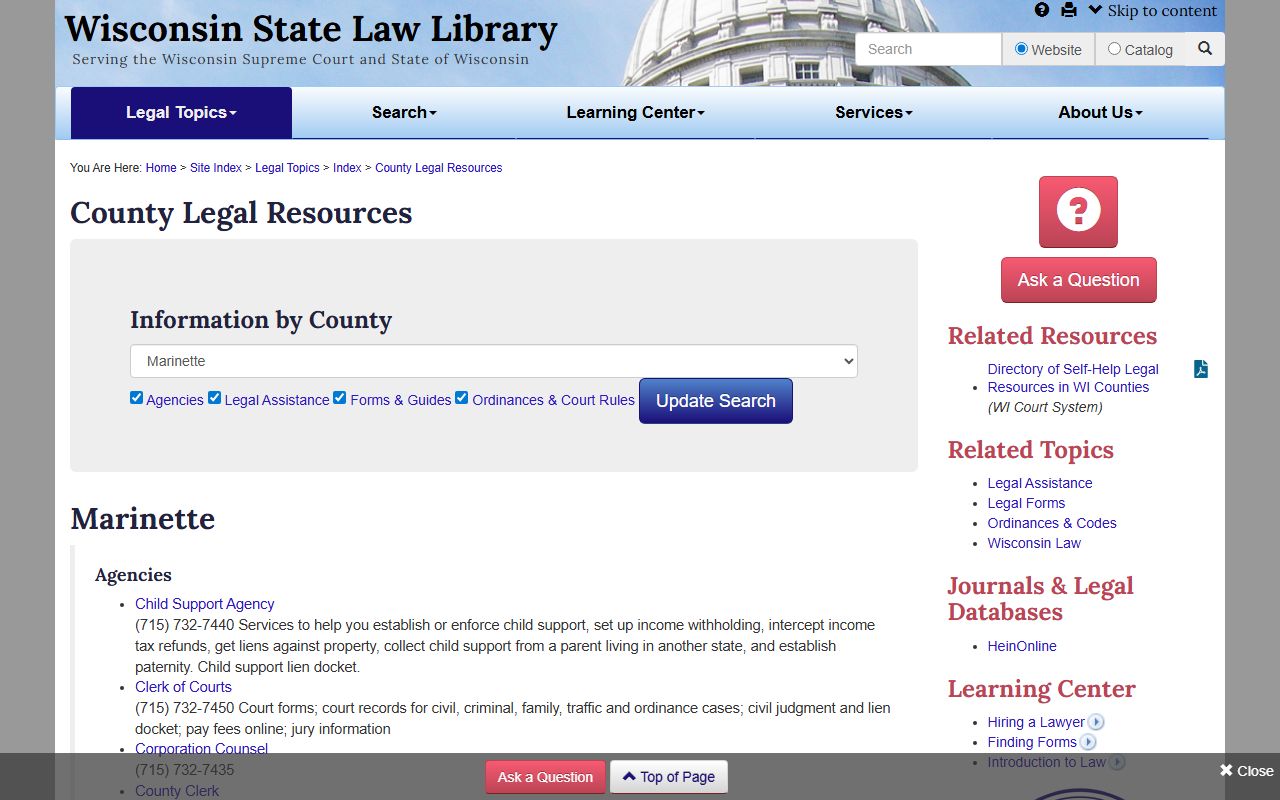
That reference helps when you want a county-level legal source that sits closer to the clerk office than a general web summary does.
The Marinette County law library page gives a concise planning view of the local process.
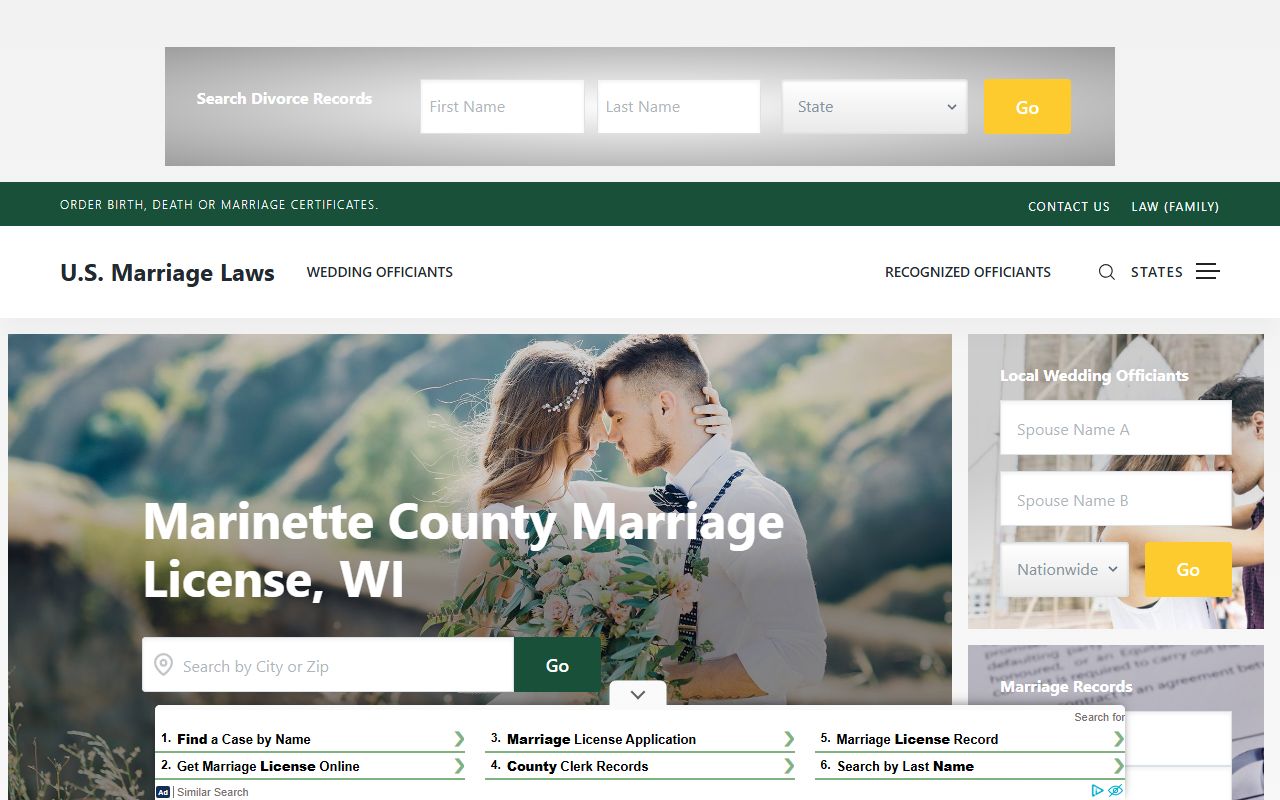
Use it as a quick orientation source, then let the clerk office confirm the current fee and waiting period before you rely on the details.
Records After The Marriage
After the ceremony, the signed marriage license moves from the clerk process into the record system, and that is the part many couples need later when they change names or request certified proof. The state vital-records page at dhs.wisconsin.gov/vitalrecords is the best statewide starting point for modern certified copies. For Marinette County, that is useful because the county office issues the license, but the later copy request belongs to the broader Wisconsin record system rather than just the front counter where the application started.
If your search is historical instead of current, the Wisconsin Historical Society guide at wisconsinhistory.org/Records/Article/CS88 is the better place to begin. Older Marinette County marriage records may be easier to find through historical indexes and county-level references than through a modern certificate request path. That is one reason the county law-library source is helpful even after the ceremony. It gives you a local legal doorway that still points back to the state record structure when you need it.
The important thing is to keep the record trail clear. The clerk office handles the application, the ceremony completes the marriage, and the returned license becomes the official record that can support later documentation. If you need to call back after the wedding, the Marinette County clerk phone number is still worth keeping close because it is the fastest way to confirm where a copy request should begin or whether a local office has redirected the process.
That last step is easy to forget, but it is the one that turns the marriage license into something you can use later. A clean return and recording process prevents problems when you need proof months or years after the wedding date.