
Find Taylor County Marriage License
Searching for a Taylor County marriage license starts in Medford, where the clerk office handles the local file and points you to Wisconsin's statewide marriage rules. The county research is short, so the best way to work is to keep the office contact, the county law library page, and the state sources in one line. That makes the search practical if you are trying to find the right desk, line up the ceremony date, or understand how the record moves after the license is issued. Taylor County is easiest to manage when the clerk and the calendar are both clear.
Taylor County Marriage License Office
The Taylor County Clerk office is at 224 S. 2nd St., Medford, WI 54451, and the phone number in the research is 715-748-1413. That office is the local starting point for a Taylor County marriage license, so it is the place to call before you plan the trip. The county summary is short, which makes the clerk the most reliable source for the live process. A quick call can confirm whether both applicants should appear together and whether the office wants anything specific at the counter.
The research lists the fee as $75, which gives Taylor County a clear cost baseline. Even so, the office should still confirm the current amount before you go. Fee details can shift, and a short summary page will not always reflect the latest local practice. If you are planning around travel or a wedding weekend, the fee question matters because it affects both the appointment and the payment you need to bring. A county with a simple fee is still a county where the clerk should verify the current amount.
The Taylor County Law Library page at wilawlibrary.gov/topics/county.php?c=Taylor&a=a&l=l&f=f&r=r is the best local government reference in the research bundle. It keeps the county process tied to a public Wisconsin source rather than a generic summary. When the county research is thin, that kind of page helps anchor the marriage-license search in the right place and keeps the local office front and center.
Taylor County does not appear to use a special local marriage-license system beyond the standard clerk office. That means the practical job is straightforward. Call the office, confirm the current fee, confirm what the clerk expects, and then build the ceremony plan around the issue date. A small county file is easier to manage when the office visit is treated as the first fixed point in the schedule.
Taylor County Marriage License Basics
Wisconsin Law Help explains that couples generally apply together and in person, and that the license can be used and filed in any county in Wisconsin. That statewide rule matters in Taylor County because it shows why the Medford office is the start of the process, not the whole story. If the ceremony happens in another Wisconsin county, the license still fits into the same legal chain once the clerk issues it.
The same Wisconsin Law Help guidance says applicants should know the ceremony date and the ceremony location when they apply. That is simple, but it is easy to miss if you are thinking about travel or lodging instead of the clerk appointment. Taylor County couples should also be ready to provide the identity details the clerk needs to review the file. If either applicant was previously married, the end-of-marriage paperwork may also matter before the license can be issued.
Wisconsin Statutes Chapter 765 provides the legal structure behind the county process. It is the reason the clerk office in Medford needs the application information in place before a valid license can be issued. For younger applicants, the statewide age rules still control the process. Wisconsin Law Help says 16- and 17-year-olds need written parental permission, and anyone under 16 cannot marry. Taylor County follows that same statewide standard at the counter.
The county summary is short, but the legal path is still clear. Taylor County is applying Wisconsin law locally, which means the best prep is to keep the wedding date, the location, the clerk contact, and the supporting papers in one place before the appointment. If everything is ready when you arrive, the office can focus on issuance instead of sending you back for a missing detail.
Taylor County Marriage License Timing
The research summary lists a 6 day waiting period, so the ceremony date should be planned with that delay in mind. That is long enough to matter. If the wedding is already tied to guests, lodging, or travel, the license should be handled early enough that the wait does not squeeze the schedule. Taylor County works best when the office visit happens before the calendar gets too tight.
The fee is listed, so the timing call to the clerk can cover both cost and the issue window in one shot. That keeps the plan efficient and avoids a second trip because a key detail was not confirmed. In a county with a short summary, the clerk is the most reliable source for the live process. A direct call is better than guessing from a web page that leaves out the local rhythm.
The state sources help frame the rest of the schedule. Wisconsin Court System marriage information and Wisconsin DHS vital records explain how the license fits into the wider record system after the ceremony. Wisconsin Law Help gives the plain-language basics. Taylor County follows that statewide framework, but the county office is still the only place that can confirm the local timing you need.
Because the county wait is known, the best plan is to count back from the ceremony date and leave a little room for the office visit and any follow-up. That keeps the local process grounded and avoids a last-minute schedule problem. If you are coming from outside Medford, the office call should be the first thing you lock down.
Taylor County Marriage License Records
After the ceremony, the signed license becomes part of the marriage record trail, and that is where Wisconsin DHS vital records becomes useful. It is the statewide starting point for certified marriage copies. That matters in Taylor County because the clerk office issues the license, but the later copy request belongs to the broader Wisconsin system after the marriage is recorded. If you need proof later for a name update or another official use, the state record path is the one to follow.
The Wisconsin Court System name-change guidance at wicourts.gov/services/public/selfhelp/namechange.htm is also useful because it explains that a court order is typically not required when the name change comes from marriage. The guidance points people to a certified marriage certificate instead. That makes the difference between the license and the certificate clear. The license gets the process started, and the certified certificate is the document that supports later changes.
For older family research, the Wisconsin Historical Society article at wisconsinhistory.org/Records/Article/CS88 is the better reference. It explains the pre-1907 collection and the point where modern statewide records take over. That is useful if your Taylor County search is not about a recent marriage but about older family history. The historical path is different from the modern copy path, and knowing the difference saves time.
Taylor County fits the standard Wisconsin record pattern. The clerk in Medford handles the license, the ceremony completes the marriage, the state vital-records system supports certified copies, and the historical society helps when the search goes back in time. Once you know which office belongs to which step, the county page becomes much easier to use.
Taylor County Marriage License Images
The Taylor County Law Library page at wilawlibrary.gov/topics/county.php?c=Taylor&a=a&l=l&f=f&r=r is the best local government reference in the research bundle for the Taylor County marriage license process.
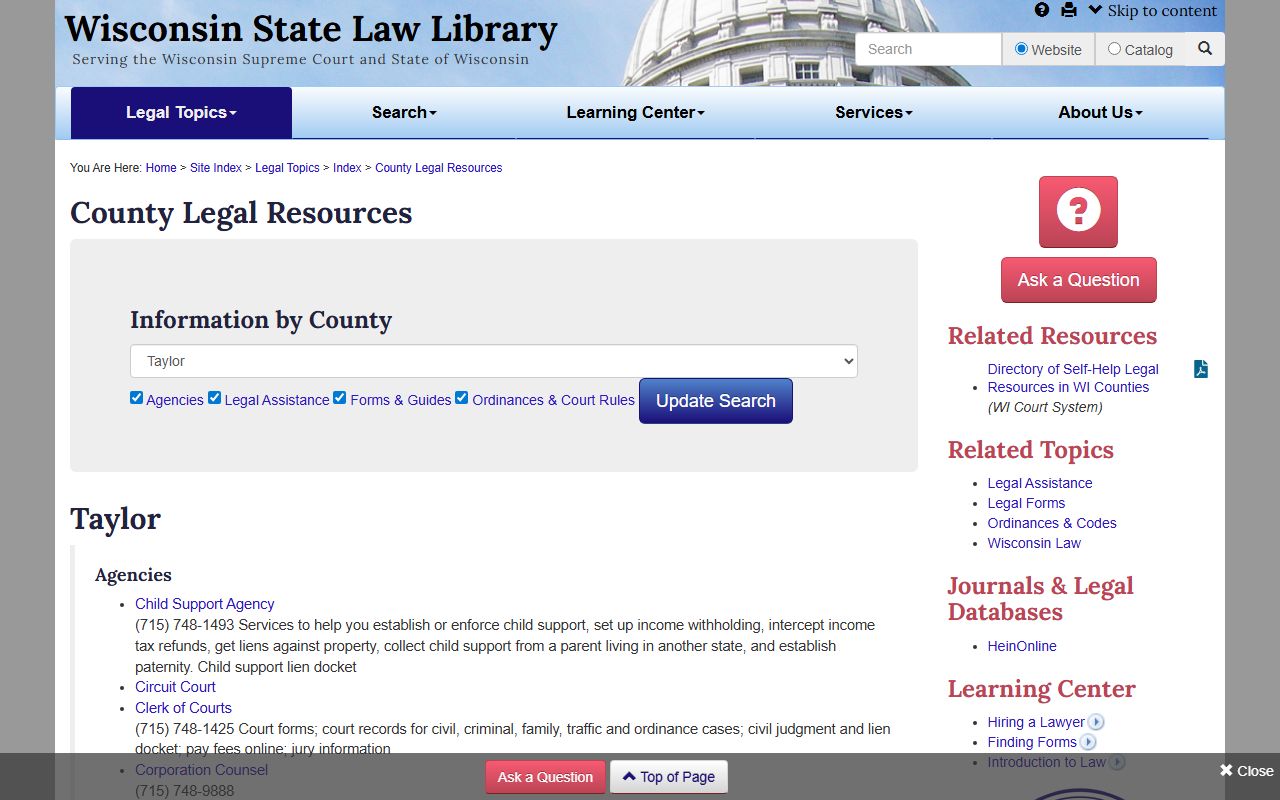
Use that source when you want a county-level legal page that stays close to the clerk office in Medford and the Wisconsin rules behind it.